{{ post.date }}
{{ post.readTime }}
The construction industry has long been defined by the grit of the field, but for many business owners and project managers, the real “grind” happens behind a desk. For every hour spent pouring concrete or framing walls, there seems to be an equal amount of time spent on paperwork, scheduling, and payroll. However, the latest product update from Remato is changing that narrative. By introducing construction task automation through features like Task Template Duplication, the platform is bridge the gap between manual labor and digital efficiency.
Before diving into the technical updates, it is essential to understand the problem they solve. Most small-to-medium construction firms operate under what we call an “administrative tax.” This is the hidden cost of manual processes.
In construction, many tasks are repetitive- like installing a smart home system across multiple floors or units. Without an automated system, a manager might spend a significant amount of time manually creating a new checklist for every single room, even if 90% of the steps are identical.
According to the data traditional manual methods are incredibly draining:
When you multiply these numbers across a year, you aren’t just losing minutes; you are losing weeks of productive time that could have been spent growing the business or bidding on new projects. This is exactly where construction task automation steps in to reclaim those lost hours.
The centerpiece of this update is Task Template Duplication. In the world of construction, work is often repetitive. If you are an electrical subcontractor, the “Smart home system integration” task you perform in Unit A is likely 95% identical to the one you need to perform in Unit B.
In the past, managers had to recreate these checklists and instruction sets from scratch for every new project or unit. This update changes that:
This is a prime example of construction task automation. By removing the need for “recreating templates from scratch,” Remato reduces repetitive work and keeps the workflow consistent across different job sites.
The most striking part of this update is the visual proof of time saved. When a company moves from manual entries to automated systems, the shift in productivity is immediate and drastic.
Manual timesheet management is a nightmare of chasing down paper scraps and deciphering handwriting. Remato’s data shows that while manual compilation takes 30-60 minutes, the automated process, which is fuelled by the tasks assigned in the app, takes only 0-5 minutes.
The gap is even wider here. Manual payroll is a 4-6 hour ordeal of data entry and verification. Through construction task automation, this entire process is streamlined into a 0-5 minute task. This isn’t just a minor improvement; it is a total transformation of the back-office workload.
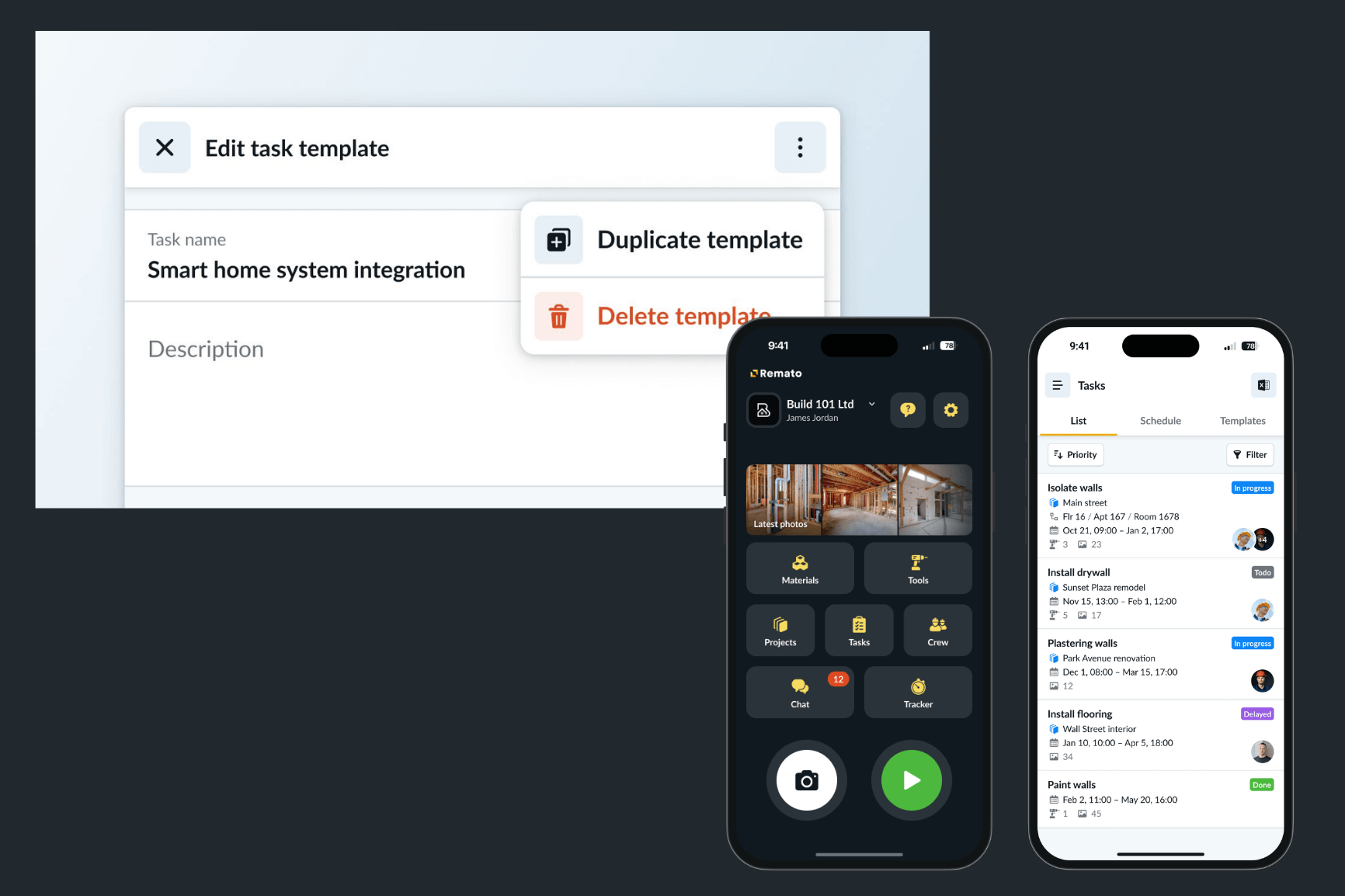
Implementing construction task automation through features like template duplication just saves time!
The message from Remato’s update is clear: “No more recreating templates from scratch when most fields are the same”. This update is designed to save time, reduce repetitive work, and keep your workflow consistent.
As the construction industry continues to modernise, the firms that embrace construction task automation will be the ones that stay competitive. By utilising Task Template Duplication and automated reporting, you ensure that your team spends less time clicking through menus and more time on the job site doing what they do best.