Running a small construction company usually means doing almost everything yourself:
Selling projects
Coordinating crews
Ordering materials
Solving on-site issues
Managing paperwork
Communicating with clients
At a certain point, this workload becomes too heavy for one person. The business reaches a critical moment where you can no longer supervise the team effectively while also keeping projects on schedule and pushing the company forward.
This article will help you:
Recognize the signs that it is time to hire your first foreman
Decide whether your company is financially and operationally ready
Understand the benefits and risks of hiring too early or too late
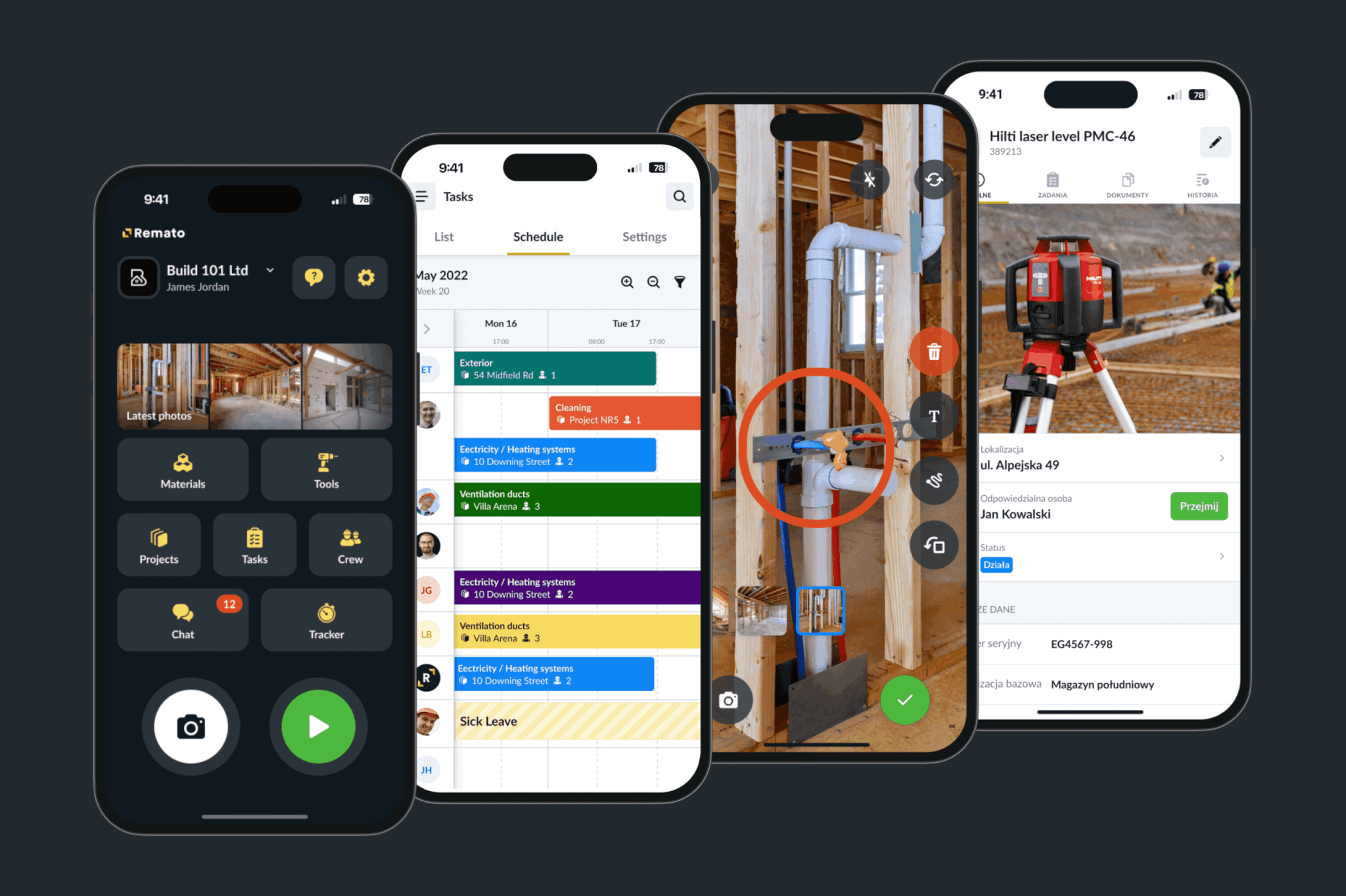
Learn how to delay the need for a foreman by using digital tools like Remato
The goal is to provide a practical, straightforward guide for small construction company owners who want to grow in a controlled and profitable way.
Table of Contents
What a Foreman Actually Does
Before deciding when to hire a foreman, it helps to clearly understand the role. In small construction companies, a foreman is the person who takes over day-to-day supervision on site so the owner can focus on running the business.
Typical responsibilities include
Leading and coordinating the crew
Assigning daily tasks and making sure work progresses as planned
Solving small on-site problems without waiting for the owner
Communicating with clients, suppliers, subcontractors, and inspectors
Ensuring work quality matches company standards
Monitoring safety and preventing accidents
Keeping track of progress, materials, and basic documentation
Reporting issues that require the owner’s decision
Why this role matters
It reduces the owner’s daily interruptions
It keeps job sites moving even when the owner is elsewhere
It improves consistency and quality across all projects
It frees up the owner’s time for sales, planning, and finances
It enables the company to run multiple projects at once
Clear Signs You’ve Reached the Critical Moment
There is no universal rule for when a small construction company must hire a foreman. However, certain patterns show up again and again. When several of these signals appear at the same time, it usually means the owner can no longer manage everything alone.
1. Crew Size Signals
You are managing more than 5–8 workers directly
The team constantly needs instructions or clarification
Experienced workers are spending time guiding others instead of doing their own tasks
Productivity drops whenever you are not physically present
2. Operational Signals
Jobs are running late because you can’t be on every site
Quality becomes inconsistent from project to project
Rework, misunderstandings, and callbacks are increasing
You notice small safety issues or near-misses that happen when you are away
Problems pile up and only get solved when you show up personally
3. Personal Workload Signals
Your phone never stops ringing during work hours
You spend evenings or weekends catching up on planning and paperwork
You feel like you are constantly reacting instead of controlling the work
You struggle to be on-site, handle clients, and keep administration up to date
Stress increases and you start missing details you normally catch
4. Business Growth Signals
You turn down projects you could deliver because you lack supervision capacity
Sales slow down because you are too busy managing the crew
Cash flow becomes unpredictable due to delays or rework
New opportunities appear, but you cannot take them without stretching yourself too thin
Rule of thumb:
If three or more of these signals apply to your situation, you are very likely at the critical moment when hiring your first foreman becomes necessary.
Financial Check: Can You Afford a Foreman Yet?
Hiring a foreman is both a management decision and a financial one. The goal is to add someone who increases productivity enough to pay for their own role.
1. Understand the Cost
Foreman salaries vary widely by region, trade, and experience
Expect a noticeable increase in monthly payroll
Also consider indirect costs such as tools, vehicle, and insurance if applicable
2. Rule of Thumb
A foreman should help your company:
Finish projects faster
Reduce rework and mistakes
Keep crews productive without your constant presence
Handle issues before they become expensive problems
If these improvements offset their salary, the hire makes financial sense.
3. Early-Stage Alternatives
If you are not fully ready for a full-time foreman, consider:
Promoting a senior worker to an informal foreman role with limited responsibilities
Using a part-time or project-based foreman for complex jobs
Hiring a foreman only for peak periods or seasonal workload spikes
Strengthening supervision with digital tools until the budget allows a full-time role
4. Warning Sign
If your projects consistently lose money because you are stretched too thin, the cost of not hiring a foreman may already be higher than the cost of hiring one.
Benefits of Hiring a Foreman
Hiring your first foreman can transform how your construction company operates. Once the right person is in place, the business often becomes more stable, more predictable, and easier to grow.
1. Better Division of Responsibilities
You focus on sales, planning, finances, and client relationships
The foreman focuses on daily on-site operations
Less juggling, fewer mistakes
2. More Predictable Schedules
Tasks start on time because someone is always coordinating
Delays are spotted early and corrected quickly
Fewer interruptions to your weekly plan
3. Higher Productivity
Crews stay busy without waiting for instructions
Materials are prepared or ordered before they run out
On-site decisions are handled in real time
4. Improved Work Quality
Consistent standards across all projects
Issues are fixed immediately, not days later
Better site organization reduces errors
5. Stronger Client Communication
Foreman can provide updates when you are not available
Clients feel informed and confident in the process
Fewer misunderstandings or surprises
6. Ability to Scale
You can take on more projects simultaneously
You can manage more workers without losing control
Growth becomes a planned process instead of a source of stress
Hiring a foreman is not just a cost. It is an investment in stability, professionalism, and long-term growth.
How to Delay the Need to Hire a Foreman
Many small construction companies rush into hiring a foreman simply because daily coordination becomes overwhelming. Before taking that step, you can often extend your capacity by using digital tools that reduce the amount of supervision required.
This gives you foreman-like oversight without being on every site.
6. Support Senior Workers
Digital tools make it easier for experienced workers to:
Take limited leadership roles
Document issues
Guide less experienced crew members This can bridge the gap before hiring a full-time foreman.
Key Point
Good software does not replace a foreman forever, but it can significantly delay the need for one and reduce workload when you eventually hire.
Practical Checklist: Are You at the Critical Moment?
Use this checklist to assess whether you truly need a foreman or whether you can still continue managing the crew yourself with better systems.
Crew and Operations
You manage more than 6–8 workers directly
You run multiple projects at the same time
Productivity drops when you are not on-site
Quality varies from project to project
Rework, errors, or callbacks are becoming more common
Your Own Workload
Your phone constantly interrupts your day
You spend evenings or weekends doing planning or paperwork
You feel reactive instead of in control
Important tasks fall through the cracks
Stress is rising and affecting your decision-making
Business Performance
You turn down projects due to lack of time or supervision
Jobs are delivered late because coordination is overstretched
Profit margins shrink due to delays or mistakes
Your sales pipeline is weaker because you spend all day on site
Technology and Systems
You rely on verbal instructions instead of documented plans
Communication requires repeated explanations
You lack real-time visibility into progress
You don’t use digital tools to support daily operations
Interpretation
If 3–4 items apply: You’re approaching the critical moment
If 5–7 items apply: You should prepare to hire a foreman soon
If 8+ items apply: You are likely past the critical moment already
How to Make the First Foreman Hire a Success
Hiring your first foreman is a major step. To make it work smoothly, you need a clear plan, realistic expectations, and the right systems in place.
1. Choose the Right Person
Look for leadership qualities, not just technical skills
Prioritize communication, reliability, and problem-solving
Consider promoting a trusted senior worker who already knows your standards
If hiring externally, check references carefully and test on a small project first
2. Define Responsibilities Clearly
Daily task coordination
Quality control
Safety checks
Material and equipment planning
Reporting issues to the owner Clear responsibilities prevent confusion and reduce the risk of unmet expectations.
3. Start With a Trial Period
Use a defined test phase of 1–3 months
Set clear goals and performance indicators
Review weekly to ensure the transition is working A trial period helps both sides adjust smoothly.
4. Give Structure and Tools
Provide a simple daily checklist
Use digital tools like Remato for tasks, reporting, photos, and scheduling
Document workflows so the foreman doesn’t need to invent their own system Structure accelerates their success and reduces dependency on your constant oversight.
5. Communicate Regularly
Hold short morning or end-of-day check-ins
Review progress and issues consistently
Encourage open communication, especially during the first few months Good alignment prevents small problems from becoming big ones.
6. Measure Impact With Simple, Practical Indicators
You do not need complex KPIs to evaluate a new foreman. Focus on a few straightforward changes that you can observe week by week.
Productivity
Are workers starting earlier and wasting less time waiting for instructions?
Are tasks completed closer to the planned schedule?
Does the crew move more smoothly from one task to the next?
Quality
Are there fewer mistakes or callbacks?
Are finished areas matching your standards without your direct supervision?
Do clients comment positively on workmanship?
Safety
Are hazards spotted and fixed before you arrive?
Are there fewer minor accidents or near-misses?
Is the site cleaner and more organized?
On-Time Delivery
Are projects finishing closer to the estimated timeline?
Are delays handled early instead of becoming major issues?
Are subcontractors and suppliers coordinated more effectively?
Client Satisfaction
Are clients getting clearer updates and fewer surprises?
Are there fewer complaints or last-minute changes?
Do clients trust the foreman when you are not on-site?
Your Own Workload and Stress
Are you spending less time on-site putting out fires?
Do you have more time for planning, sales, and administration?
Do you feel in control instead of constantly rushed?
Practical Rule
If you see steady improvements in at least three of these areas within the first 1–2 months, the foreman is having a positive impact. If not, you may need clearer instructions, more structure, or a different person in the role.
Frequently Asked Questions
1. How many workers do I need before hiring a foreman?
Most small construction companies reach the limit at around 6–8 workers. Beyond this point, coordination becomes difficult, quality becomes inconsistent, and the owner often becomes the bottleneck.
2. Is it better to promote from within or hire externally?
Promoting from within works well if you have a trusted, experienced worker with leadership qualities. Hiring externally is useful when you need stronger management skills or want someone who has led multiple crews before. Both options work if the responsibilities are clear.
3. What if I cannot afford a full-time foreman yet?
You can start with lower-cost alternatives: part-time foreman, project-based foreman for complex jobs, senior worker with limited leadership duties, better planning and software to reduce supervision needs.
These options help bridge the gap until you can afford the full-time role.
4. How long does it take for a foreman to become effective?
Most foremen take 4–12 weeks to settle into the role. The ramp-up is faster if you provide structure, checklists, planning tools, and clear expectations. Poor onboarding is the main reason foreman hires fail.
5. Can software replace a foreman completely?
No, software cannot replace a foreman’s leadership and decision-making. However, it can significantly delay the need for one by improving communication, planning, documentation, and on-site coordination. When you eventually hire a foreman, software also makes them more effective from day one.
Conclusion
Hiring your first foreman is one of the most important milestones in running a construction company. It marks the moment when daily site supervision can no longer depend on one person and when the business needs stronger structure to grow.
The key is timing.
Hire too early, and you add cost without solving real problems.
Hire too late, and delays, rework, and stress start eating into your profit.
Use the signs in this guide, review the checklist, and evaluate your workload honestly. If you are consistently overwhelmed, losing control of job sites, or turning down work because you cannot manage everything yourself, you are likely at the critical moment.
Before taking that step, make sure your systems are solid. Tools like Remato can help you stay organized, reduce supervision needs, and keep projects moving even when you are not on-site. With the right setup, you can either delay the need for a foreman or ensure the new hire becomes productive much faster.
When you finally make the decision, choose the right person, give them structure, and measure progress with simple indicators. A good foreman will bring stability, consistency, and the capacity to grow your company to the next level.
Never miss a piece
Get exclusive tips, tools, and updates on managing projects, teams, and assets.