{{ post.date }}
{{ post.readTime }}

Daily site documentation, often called a site diary, construction diary, or site log is one of the most underestimated tools on a construction project. It takes minutes to complete, yet it can decide the outcome of claims, disputes, audits, and inspections months or even years later.
In this article, we explain:
A construction site diary is a daily, contemporaneous record of activities, conditions, and events on a construction site. It is completed as the work happens (or immediately after) and provides a factual account of how the project progressed day by day.
Unlike progress reports or meeting minutes, a site diary focuses on what actually occurred on site, not what was planned or later interpreted. Its value lies in being written in real time, before memories fade, positions harden, or disputes arise.
To make this practical, we’ve created a free, simple site diary template that reflects how diaries are used in real projects across the EU and UK:

A daily site diary helps you remember what happened on site, proves you did things properly, and protects you if problems come up later.
Its importance is proven repeatedly in audits, claims, and court decisions across the EU and UK.
For example, German courts have reduced professional fees where required site diaries were not properly maintained, while Polish courts regularly assess construction logs as key contemporaneous evidence in disputes.
The reasons to use a daily site diary fall into three main categories:
A. Statutory Requirement in Certain Jurisdictions
In several European countries, daily site documentation is required by law.
Failure to keep these records can result in:
Even where legislation does not explicitly name a “site diary”, authorities still expect traceable records of site activity.
B. Health & Safety Compliance
Across the European Union and the United Kingdom, construction law places strong emphasis on:
After an accident or inspection, regulators typically ask:
A daily site diary is often the only document that can answer those questions clearly and credibly.
A. Records written on the day have value
When disputes arise, the people deciding the case (clients, adjudicators, arbitrators, or courts) usually trust records written at the time more than documents created later.
They place less weight on:
A daily site diary is important because it:
In many cases, a short diary note written on the day can carry more weight than long expert reports prepared much later.
For example, a diary entry noting that work stopped due to heavy rain can be more convincing than a weather report added months later.
B. Support for delay, disruption, and change claims
Most construction contracts require proof of cause and effect
Daily site diaries help establish:
Without daily records, claims often fail not because the contractor was wrong, but because the contractor cannot prove it.
C. Protection against allegations and claims
Site diaries are not only used to support claims, these also help defend against accusations.
They can help rebut allegations of:
Silence in the diary is often interpreted as nothing happened. A consistent record protects against that assumption.
A. Better day-to-day site management
From a purely practical perspective, a daily site diary:
It allows project teams to answer simple but critical questions quickly:
B. Low effort, high value
A well-structured diary typically takes 5–10 minutes per day to complete.
That small investment can:
Few project controls offer such a high return for such minimal effort.
C. Paper vs digital diaries
Whether kept:
However, digital diaries offer clear practical advantages:
A simple digital diary, filled in consistently, is often far more effective than a complex paper system that is used irregularly.
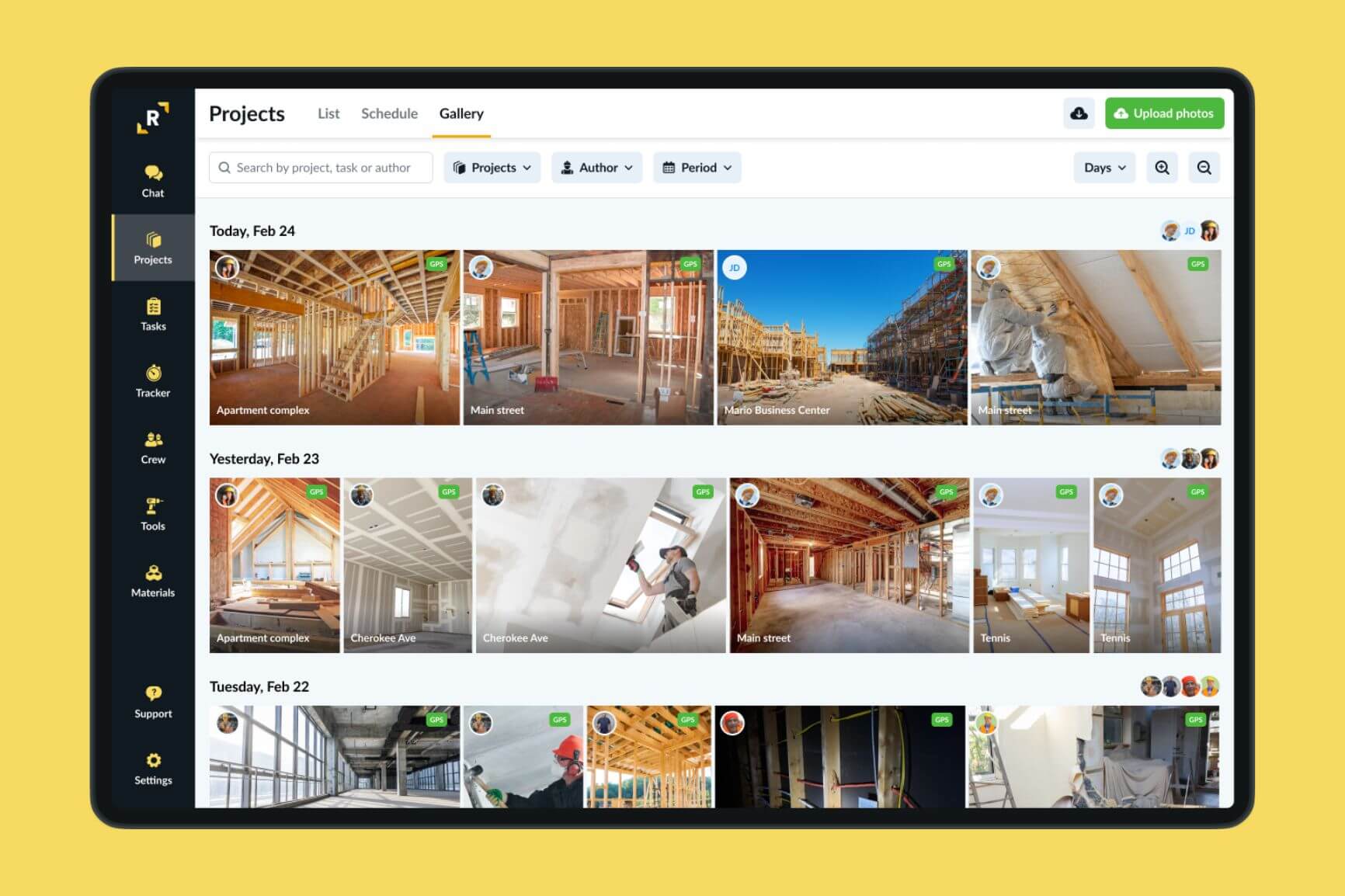
Remato offers a set of interconnected products that directly support the creation and management of daily construction logs by capturing real-time site data in a structured way. Through Remato, site teams record workforce attendance, working hours, tasks performed, photos, and site notes directly from the field, while managers get a consolidated daily overview without manual follow-ups. Time tracking feeds labor data into daily logs, site diaries compile activities and observations, and photo documentation adds visual proof of progress or issues. Together, these products automatically generate standardised daily construction logs that are accurate, traceable, and ready to be shared with clients, accountants, or legal stakeholders, eliminating paper reports and fragmented spreadsheets.
Even when site diaries are being kept, their value is often reduced by a few common and avoidable mistakes.
Most often, these issues include:
Unfortunately, courts and adjudicators are quick to spot these weaknesses, and they tend to place much less weight on records that look incomplete or unreliable.
The good news is, a site diary does not need to be perfect. However, it does need to look routine, written at the time, and honest. When it does, even short daily notes can carry significant weight later on.
First of all, someone needs to be clearly responsible for the site diary. If everyone assumes someone else is doing it, it usually does not get done properly.
n most cases, the diary is kept by the site manager, site engineer, clerk of works, or another supervisory team member who is regularly on site, for example on apartment building projects, housing estates, road and rail infrastructure works, or other long-running construction projects where daily conditions and activities need to be tracked consistently.
That said, the job title matters far less than how the diary is actually kept. What really counts is that:
On larger projects, more than one person may contribute information. Even then, all inputs should feed into one clear, consolidated daily record, rather than multiple disconnected notes.
A construction site diary is a simple habit with long-term consequences. Written daily and kept consistently, it creates a factual record of what actually happened on site, not what was planned or later remembered. Across the EU and the UK, site diaries play a critical role in legal compliance, health and safety, claims, audits, and dispute resolution.
The key takeaway is that a site diary does not need to be detailed or perfect. It needs to be routine, contemporaneous, and honest. A few minutes per day spent recording workforce, activities, conditions, and key events can protect a project team months or even years later. Whether kept on paper or digitally, a well-maintained site diary remains one of the most effective and underestimated tools in construction project management.