{{ post.date }}
{{ post.readTime }}
Daily logs, safety records, progress tracking, legal documentation, digital reporting and practical field workflows.
Construction site reporting is often described as paperwork. That is too small a description. On a real project, reporting is the project’s memory, evidence system, communication channel, risk register, safety record, quality record and management dashboard.
This guide is practical, not theoretical only. It explains what construction site reporting is, why it matters, what reports are used, how to write them, how to use them for safety, quality, progress, cost, legal compliance and how digital systems are changing the work.
For projects supported by EU funds, teams may also need to understand EU funding reporting obligations before setting up their reporting process.
It is not legal advice. Construction reporting duties depend on the country, contract, project type, building category, authority requirements and client requirements. Always check local legislation, permits, contracts and professional advice before relying on any legal summary.
Construction site reporting is the systematic recording, communication, review and storage of information about what happens on a construction site.
A construction site report may record:
A good report does not simply say that work happened. It explains what happened, where it happened, who was involved, why it matters and what evidence supports it.
Every construction site report should help answer five practical questions:
If a report cannot answer these questions, it is usually too vague to be useful.
These three terms are related but not identical.
Reporting (Construction site reporting) is the regular communication of project status or events. Examples include daily site reports, weekly progress reports, monthly client reports, safety reports and delay reports.
Documentation is the formal storage of records. Examples include permits, inspection records, test certificates, as-built drawings, method statements, risk assessments, construction logs, delivery notes and handover files.
Communication is the exchange of information between people. Examples include meetings, emails, RFIs, instructions, phone calls, toolbox talks and site briefings.
Good construction reporting connects all three. A site event is communicated, recorded in a report, supported by documentation and stored so it can be found later.
Construction reporting can be formal or informal.
Formal reports include:
Informal reports include:
Informal communication is useful, but it is risky if it is the only record. A professional reporting system converts important informal information into formal records. This is especially true for owners who need to manage multiple job sites at once, where scattered updates from different locations quickly stop being a reliable source of truth.
Office reports are usually written in controlled conditions. Site reports are written or reported in a live environment with noise, weather, interruptions, urgent decisions and limited time.
That difference matters. A reporting system that looks perfect in an office may fail on site if it takes too long, requires too many fields, does not work offline or is difficult to use with gloves, dust, low light, or language barriers.
A strong site reporting system must be designed for reality, not only for management preference.
Every construction project needs memory. The project memory is the complete record of what happened from start to finish.
Project memory is built from:
Without project memory, people rely on personal memory. Personal memory is incomplete, emotional, selective and often disputed. Reports create shared memory.
Construction site reporting is not:
Reporting should support action. If a report does not help someone manage, verify, decide, prevent, prove, or learn, the process should be improved.
Good reporting is what keeps a construction project honest. When reports are done properly, the team knows what is really happening on site – not just what was planned, but what was actually built, what fell behind and why. When reporting breaks down, problems stay hidden until they become expensive and hard to fix.
A strong progress report does more than confirm work is “ongoing.” It answers the questions that matter:
This kind of detail gives the team something they can actually act on. It also helps teams to understand how to streamline construction workflows by turning site updates into clear next steps.
Safety reporting is another area where good habits make a real difference. The goal is not to record accidents after they happen, it is to prevent them. A healthy reporting culture encourages people to flag hazards, near misses and unsafe conditions before someone gets hurt. When people feel safe to speak up, problems get fixed early.
Quality is also protected through reporting. A lot of construction work disappears behind other work – reinforcement gets covered by concrete, waterproofing gets hidden behind finishes, fire stopping goes behind walls and ceilings. If that work is not inspected and recorded before it is covered, proving its quality later becomes very difficult. Good quality reports capture:
Cost control works the same way. Every day on site, costs are being created: labour hours, equipment time, materials used, time lost to disruption. Without daily records, cost analysis becomes guesswork. With them, the team can see exactly where money is going and act before small issues become big ones.
When conflict arise and on most projects, they do – it is the paperwork that decides the outcome. A claim supported by daily reports, delivery records, photos and instructions carries real weight. A claim without records is just one side of a story.
Beyond individual misunderstandings, good reporting builds something valuable over time. It creates accountability, a clear record of who gave instructions, who approved work and who was responsible for each decision. It also creates a record the whole team can learn from. At the end of a project, patterns become visible:
That information is genuinely useful for the next project.
Poor construction site reporting rarely feels costly in the moment. The real cost shows up later, in missed delays, failed inspections, lost claims and mistakes that keep repeating. Consistent, detailed reporting is not just admin. It is one of the most useful habits a construction team can develop.
Construction site reporting is a system of different reports serving different purposes.
The main types are:
A complete reporting system does not need to make every report long. It needs to make every important event traceable.
The daily site report is the foundation, it records the daily reality of the project.
It usually includes:
It should be completed every working day, even when progress is limited.
A progress report compares planned progress with actual progress.
It may be daily, weekly, or monthly. It should identify:
Progress reports are especially important for client communication and programme control.
Safety reports record hazards, incidents, inspections, briefings and corrective actions.
Common safety reports include:
Safety reports should focus on prevention, not only compliance.
Quality reports prove that work meets requirements.
Common quality reports include:
Quality reporting should be linked to drawings, specifications, codes and acceptance criteria.
Material reports track what arrives and whether it is suitable for use.
They record:
This protects programme, cost and quality.
Labour and equipment reports show the resources used to perform work.
They may record:
These reports are useful for productivity analysis and claims.
Environmental reports monitor site impact.
They may cover:
Environmental records are increasingly important on public, infrastructure and urban projects.
Commercial reports support payment, variations, claims and final account.
They record:
Commercial reporting must connect site facts to contract requirements.
Meetings are only useful if decisions and actions are recorded.
Good meeting records include:
Meeting minutes should not replace daily reports. They should refer to them.
Closeout reporting confirms that the project is ready for use.
It may include:
Poor closeout reporting can delay occupation, payment and final acceptance.
Reports should not be isolated. A delay recorded in a daily report may become an item in a weekly progress report, a risk in the monthly report, a contractual notice and later claim evidence.
A quality defect recorded in an inspection report may appear in the daily report, NCR register, subcontractor action list, progress report and handover file.
The reporting system should allow information to flow from field observation to management action.
The daily site report is the most important routine record on any construction project. It does not need to be long, but it does need to be accurate and complete. Done well, it captures what really happened on site each day and gives the team something reliable to plan from, report against and fall back on if questions come up later.
The report is usually prepared by the site manager, superintendent, foreman, or project engineer – someone close enough to the work to know what actually happened. On larger projects, each subcontractor may submit their own daily report, which the main contractor then pulls together into one consolidated record.
The best reports are built during the day and finished at the end of the shift. Reports written days later are less reliable and harder to stand behind if they are ever challenged. A simple daily rhythm helps:
A good daily report covers several areas. Each one matters:
The best daily reports are factual, specific and neutral. Short sentences work better than long ones. Emotional language has no place in a site report. Some of the most common mistakes are easy to fix once you know to look for them:
Before submitting, a quick check goes a long way – are all trades listed, are delays explained, are photos labelled and are open actions assigned to someone with a clear deadline?
A daily site report done properly is one of the most useful habits a site team can build. It turns each day into a record that supports better planning, protects the team when conflicts arise and keeps the whole project moving with clarity and confidence.
For a more practical look at daily reports and site diaries, see Remato’s guide on daily reports in construction, which explains how digital daily logs make reporting faster, clearer and easier to use across teams.
Safety reporting exists to prevent harm, control risk, prove compliance and improve site behaviour.
A good safety reporting system does not only record accidents. It records warning signs before accidents happen.
Safety reports may capture:
A safety inspection report records the condition of the site at a specific time.
Typical sections include:
Each finding should include:
An incident report should be completed when something has happened that caused or could have caused harm.
Incident types include:
A professional incident report should include:
A near miss is an event that could have caused harm but did not.
Near misses are valuable because they reveal risk before injury occurs. Examples:
A site with many near-miss reports may not be unsafe. It may have a good reporting culture. A site with zero near misses may have no risk, or people may simply not report.
Toolbox talks are short safety briefings. They should be recorded.
A toolbox talk record should include:
Topics may include:
Some activities require formal control before work starts.
Permit-to-work systems are common for:
Permit records should include:
A safety report without follow-up is weak.
Corrective actions should be tracked with:
A good system shows open, overdue and closed actions.
A reporting system fails if workers are afraid to report.
A strong safety culture has these features:
Safety reporting should not be a blame machine. It should be a prevention system.
Quality reporting in the construction industry refers to the systematic process of documenting, monitoring and communicating the compliance of construction works with predetermined standards, specifications, contractual requirements and applicable regulations. It forms a core component of a broader Quality Management System (QMS) on any construction project and is considered essential to the successful delivery of safe, durable and fit-for-purpose structures.
The formal practice of quality reporting in construction developed alongside the broader adoption of quality management principles in the latter half of the 20th century, heavily influenced by international standards such as ISO 9001, which established frameworks for quality assurance across industries including construction. As projects grew in complexity, scale and contractual obligation, the need for structured documentation of quality processes became increasingly recognised by contractors, clients and regulatory bodies alike. Today, quality reporting is a mandatory requirement on the majority of large-scale construction contracts worldwide, including public infrastructure, commercial development and residential projects.
Quality reporting serves several distinct but interrelated functions within a construction project:
Compliance assurance – It provides verifiable evidence that works have been carried out in accordance with the project specification, engineering drawings and relevant national or international standards such as Eurocodes, ASTM standards, or BS EN classifications.
Defect identification and resolution – By systematically recording inspections and non-conformances, quality reporting enables site teams to identify recurring defects, trace their root causes and implement corrective actions before they compound into more serious structural or contractual issues.
Audit trail and legal protection – A complete and contemporaneous quality record protects both the contractor and the client in the event of a disagreement, providing documented evidence of what was built, how it was inspected and what remedial actions were taken at every stage of the project lifecycle.
Stakeholder communication – Regular quality reports keep project owners, client representatives, consultants and regulatory inspectors informed of the overall quality performance of the project, building confidence and maintaining transparency throughout the construction process.
Continuous improvement – Trend analysis drawn from quality reports allows project managers and site teams to identify systemic weaknesses in workmanship, materials, or processes and to implement targeted improvements that benefit both the current project and future ones.
A comprehensive quality report on a construction site typically includes the following elements:
Inspection and Test Records (ITRs)– Documented evidence that specific elements of work have been inspected at defined stages and found to comply with the relevant standard. ITRs are typically tied to an Inspection and Test Plan (ITP), which maps out all required inspections across the project scope.
Non-Conformance Reports (NCRs) – Formal records raised when a piece of work, a material, or a process is found not to meet the required standard. An NCR documents the nature of the non-conformance, the area and trade affected, the proposed corrective action and the outcome of any re-inspection.
Material Conformity Certificates – Documentation supplied by manufacturers or suppliers confirming that delivered materials – such as concrete, structural steel, waterproofing membranes, or reinforcement, meet the specified technical requirements. These are cross-referenced against the works to which they relate.
Hold Points and Witness Points – Defined stages in the construction process at which work must pause and await a formal inspection sign-off before proceeding. Hold points typically require the approval of the client’s representative or an independent inspector, while witness points invite observation without mandating a halt to works.
Photographic Records – Time-stamped photographic evidence of works at key stages, including pre-pour inspections, concealed elements and finished surfaces, providing a visual audit trail that complements written inspection records.
Corrective Action Reports (CARs) – Documents that record the steps taken to address a non-conformance or quality deficiency, including the responsible party, the timeline for resolution and verification that the corrective action has been successfully completed.
Quality reporting on a construction site is a shared responsibility distributed across several key roles:
The Site Manager or Construction Manager holds primary responsibility for the day-to-day implementation of quality reporting, conducting or overseeing inspections, raising non-conformance reports and ensuring that subcontractors comply with the project’s quality requirements.
The Quality Manager or Quality Engineer, where appointed, is responsible for developing and maintaining the Quality Management Plan, auditing the implementation of the ITP, analysing quality data for trends and reporting quality performance to senior management and the client.
Subcontractors are responsible for conducting their own first-line quality checks before presenting work for inspection, ensuring that the materials and methods they use conform to the project specification and their contractual obligations.
The Client’s Representative or Clerk of Works acts as an independent observer or approver at designated hold and witness points, providing the client with assurance that work is being carried out to the required standard.
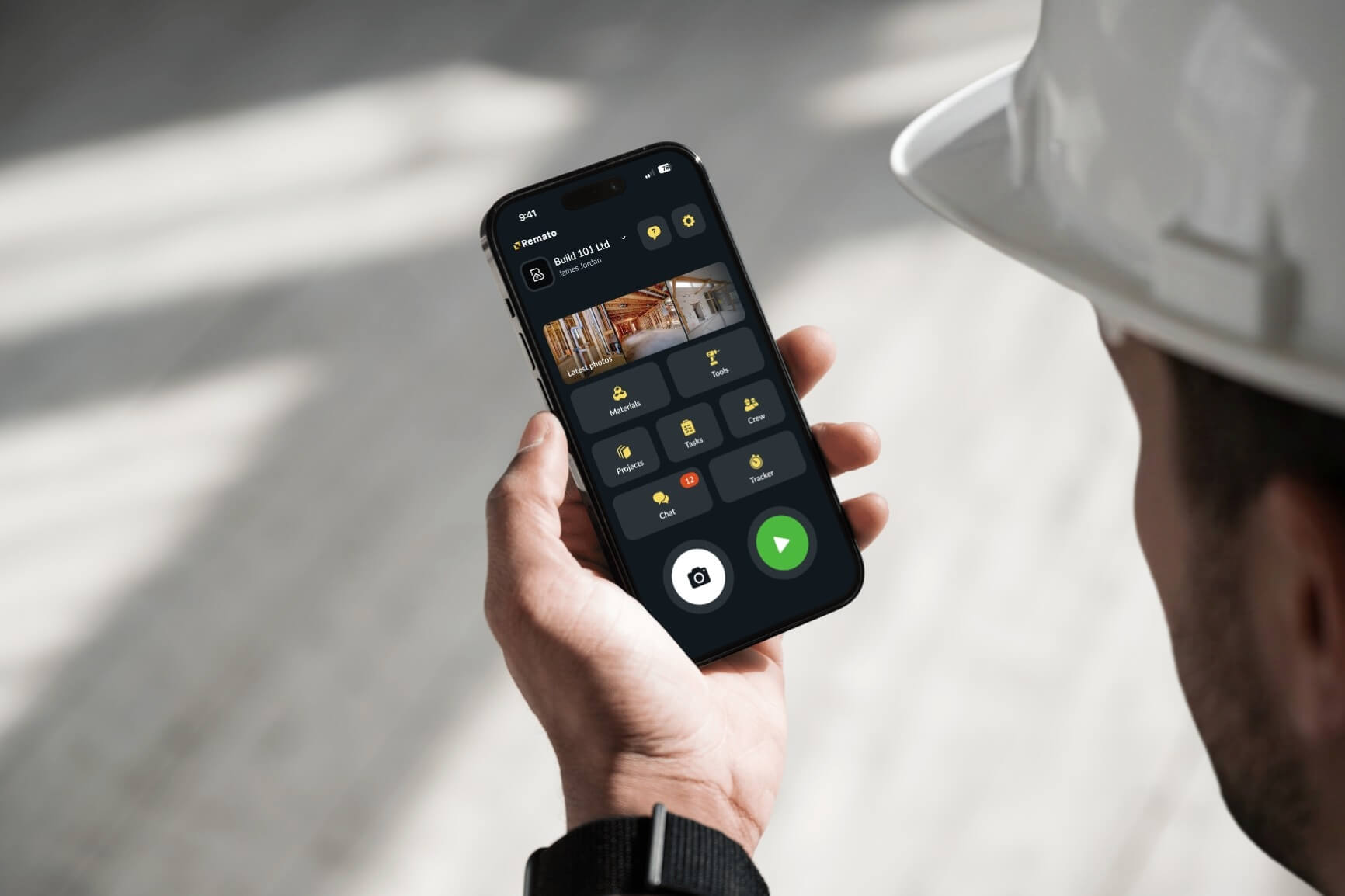
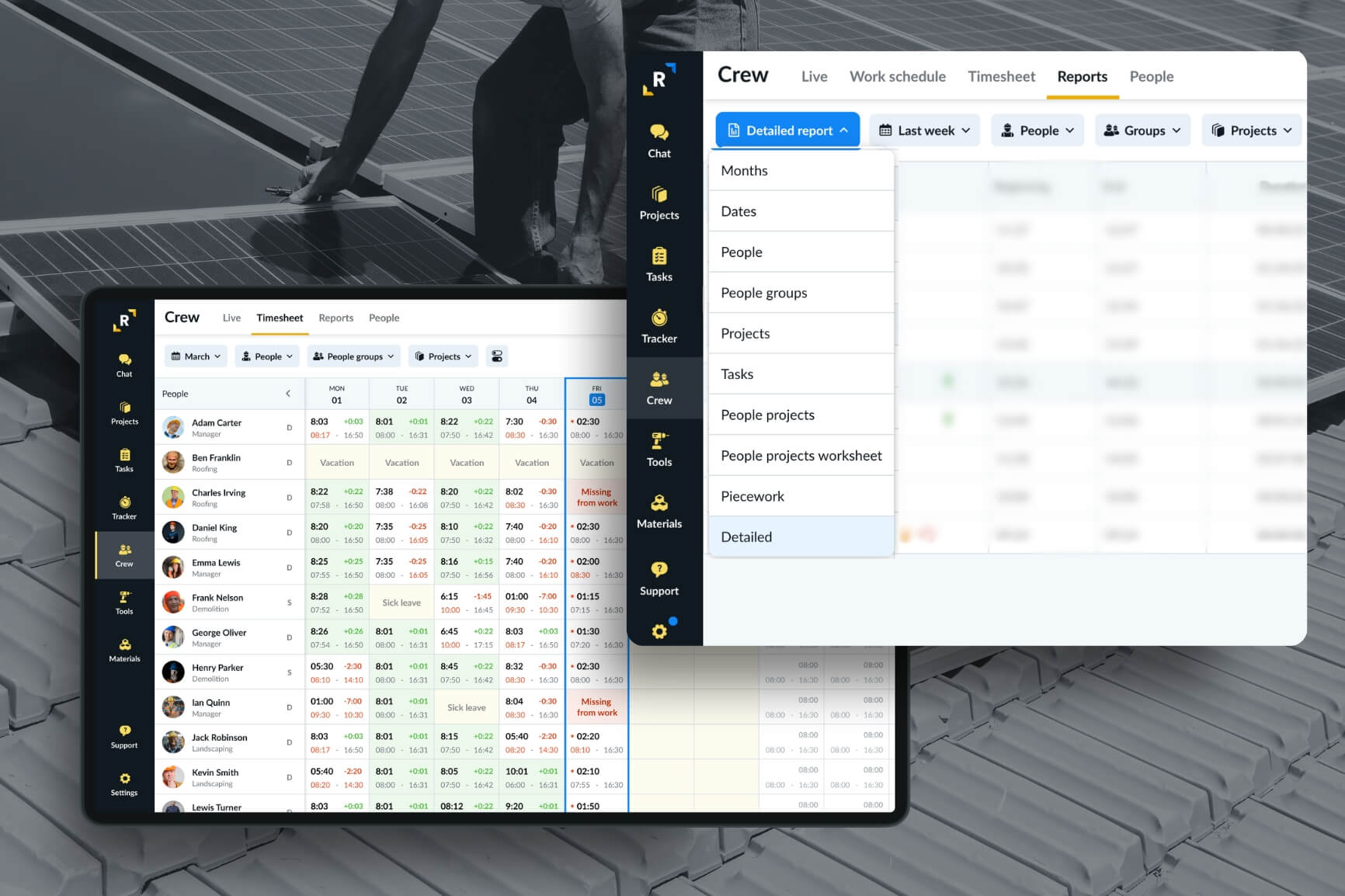
Digital site reporting tools are software platforms and mobile applications designed to replace traditional paper-based reporting processes on construction sites. They allow site teams to capture, record, store and share project data – including inspections, safety observations, progress updates, non-conformances and daily logs – in real time, directly from the site using smartphones, tablets, or laptops. The data is typically stored in the cloud, making it instantly accessible to all authorised project stakeholders regardless of their physical location.
The construction industry historically relied on paper forms, physical binders and manual data entry, a process that was slow, error-prone and difficult to audit.
Traditional construction reporting often used:
The shift to digital reporting was driven by several pressures:
Most established platforms share a common set of capabilities:
Construction reports carry significant legal weight and may be used as evidence in authority inspections, accident investigations, insurance claims, payment and delay disputes, arbitration and handover approvals – with contemporaneous records written on the day of an event holding considerably stronger evidentiary value than those reconstructed later. Records fall into two categories: those that are legally or contractually mandatory (such as safety plans, inspection records, accident logs and test certificates) and those that are voluntary but strategically valuable (such as daily site diaries, photo reports and subcontractor performance notes), both of which can become critical legal evidence when arguments arise.
Key practical points:
The following examples show how different countries treat construction reporting. They are summaries only and must be checked against current law and project-specific requirements.
Estonia regulates construction documentation through its building law system and the Register of Construction Works. For relevant works, especially permit-required construction, building work must be documented. Documentation may include a journal of building operations, as-built drawings, covered-work reports, meeting minutes, testing records, setup records, manuals and other construction documents.
The owner may also be required to submit a notice before commencement of construction works. Larger sites may also have worker and subcontractor registration duties through tax and labour administration systems.
Practical reporting focus in Estonia:
Sources: Riigi Teataja, EMTA
In the Netherlands, construction site reporting is split between the Environment and Planning Act / Omgevingswet, the Buildings Decree / Besluit bouwwerken leefomgeving, the Building Quality Assurance Act / Wet kwaliteitsborging voor het bouwen and health and safety law.
For technical building activities in consequence class 1, the Netherlands uses a quality-assurance system rather than only traditional municipal pre-approval. A building notice must be submitted to the authority at least four weeks before construction starts. It must include details such as the appointed quality assurer, a risk assessment and an assurance plan. During construction, the quality assurer checks the work against the plan and must inform the contractor/client and where unresolved issues remain, the municipality. Before use, a completion notice must be submitted at least two weeks before occupation/use, including the quality assurer’s declaration and a dossier showing compliance on matters such as structure, ventilation, energy performance, environmental performance, fire safety and equivalent measures.
The Netherlands also requires a Health and Safety Plan, called a V&G-plan, for construction projects involving particular risks or scale. The Dutch government business portal says a V&G-plan is required where construction work may involve safety risks, including cases with multiple employers, projects lasting more than 30 days with more than 20 workers, projects exceeding 500 man-days, projects with special safety risks, or projects that must be reported to the Netherlands Labour Authority. The plan covers safety agreements, who is responsible in each phase, risk inventory and evaluation and emergency measures.
The Netherlands Labour Authority also describes the V&G-plan as a construction-site-specific risk inventory and evaluation that identifies site risks and required measures, supported by coordination duties during the design and execution phases.
Practical reporting focus in the Netherlands:
Sources: The Netherlands Labour Authority, Health and Safety Plan, IPLO
Poland has one of the clearest formal systems: the dziennik budowy, or construction log, under the Construction Law / Prawo budowlane. It is the official document used to record the course of construction works, events, circumstances and technical correctness of the works. Polish guidance describes the construction log as being kept separately for each structure requiring a building permit, demolition permit, or relevant notification.
Poland also has the Electronic Construction Log / Elektroniczny Dziennik Budowy, EDB. The Polish building authority, GUNB, says EDB allows all required construction-log activities: applying for a log, receiving it, assigning duties to the site manager and other participants and making entries. GUNB describes the construction log as the most important document on a construction site.
The current consolidated Polish Construction Law provides that a log may be issued by stamping a paper log or by giving access in the EDB system. An electronic log receives an individual number. The law also provides rules for continuing paper logs electronically, closing the log when works are completed and setting detailed rules on issuing, keeping, entries, chronology, transparency, data security and authorised entries. Current official text also states that paper construction logs may be issued until 31 December 2031, subject to specific exceptions.
Practical reporting focus in Poland:
Sources: gov.pl, isap.sejm.pl, Codozasady
The UK is not one single building-control jurisdiction: England, Wales, Scotland and Northern Ireland have different building-control systems. But for Great Britain, the core construction-site reporting duties come from the Construction (Design and Management) Regulations 2015, usually called CDM 2015.
Under CDM 2015, a construction phase plan must be prepared before construction begins. It must set out health and safety arrangements, site rules and specific control measures. Where there is more than one contractor, the principal contractor prepares it; where there is only one contractor, the contractor prepares it. CDM also uses pre-construction information and, where relevant, a health and safety file for future work.
Certain UK construction projects are notifiable to HSE using the F10 notification. HSE says a project is notifiable if construction work is expected to last more than 30 working days and have more than 20 workers working at the same time, or exceed 500 person-days. The client has the duty to notify, though someone else may do it on the client’s behalf. HSE also says F10 notifications are made online, not by paper or email.
Building-control documentation is separate from CDM. For England, GOV.UK explains that building work may need building-control approval. Higher-risk buildings go to the Building Safety Regulator, while other projects may go through a local council or registered building control approver. For some work, a full-plans application and completion certificate route is used; for smaller projects, a building notice route may be possible.
Practical reporting focus in the UK:
Greece regulates construction-site reporting strongly through health and safety rules, especially Presidential Decree 305/1996, which implements EU rules on temporary or mobile construction sites. The decree sets minimum safety and health requirements for construction sites.
Where multiple crews are present, Greece requires safety and health coordinators during the design and execution phases. Before the site operates, the contractor or owner must ensure that a Safety and Health Plan / ΣΑΥ and Safety and Health File / ΦΑΥ are prepared where required. The file includes core project information such as drawings, technical description and useful information for later works.
Greece also requires prior notification to the Labour Inspectorate before site work starts for projects expected to last more than 30 working days with more than 20 workers simultaneously, or exceed 500 man-days. The notice must be displayed visibly on site and updated where necessary. The same decree extends the obligation to keep a safety measures diary to sites requiring prior notice.
Greek building permits are also heavily digitized. The official MITOS portal describes the building-permit process through the Technical Chamber of Greece’s electronic system, with applications and permit dossiers submitted online.
Practical reporting focus in Greece:
Sources: elinyae.gr, mitos.gov.gr
Norway focuses heavily on safety, health and working environment duties. The construction client must ensure a written SHA plan is prepared before construction starts. For projects above certain thresholds, prior notice must be submitted to the Labour Inspection Authority.
Norway also requires lists of persons performing work on site for relevant projects. These lists must be updated and available to authorities.
Practical reporting focus in Norway:
Construction reporting is moving from manual, disconnected, paper-based records toward digital, visual, integrated and real-time systems.
The future will not eliminate reporting. It will change how reports are created, verified, analysed and used.
Future reporting will use:
The goal is not to remove human judgment. The goal is to reduce repetitive typing.
Traditional reports are often created at the end of the day. Future systems will capture events as they happen.
Examples:
Real-time reporting allows faster decisions.
Photos, videos, drone maps, 360-degree capture and BIM-linked evidence will become more important.
Visual records help remote teams understand site conditions and reduce disputes over what was visible or complete.
Many jurisdictions are moving toward electronic permits, electronic construction logs, digital worker registers and online authority submissions.
This creates opportunities and responsibilities. Digital records must be secure, accessible, accurate and legally acceptable.
Construction site reporting is one of the main ways a project protects safety, controls quality, tracks progress, manages cost, supports legal compliance and keeps everyone working from the same facts.
Good reporting does not need to be complicated. It needs to be consistent, factual, timely and useful. A strong report explains what happened, where it happened, who was involved, what changed, what action is needed and what evidence supports the record.
Daily reports, safety records, quality inspections, delivery notes, photos, meeting actions and closeout documents all form the project’s memory. When that memory is weak, teams rely on assumptions and personal recollection. When it is strong, decisions are clearer, disputes are easier to resolve and future projects benefit from lessons already learned.
Digital tools are making this easier by reducing manual work, improving access to information and creating searchable records from the field. But the principle remains the same: construction site reporting is valuable only when it reflects real site conditions and helps people take action.
The best reporting systems are not the longest or most complex. They are the ones that site teams actually use every day.
As-built drawing: A drawing showing the final constructed condition.
Construction log: A formal record of construction progress and events, required in some jurisdictions.
Daily site report: A daily record of site activities, resources, conditions, issues and evidence.
Delay event: An event that prevents work from starting, continuing, or finishing as planned.
Disruption: Reduced productivity caused by interference, resequencing, restricted access, or other constraints.
Hidden works: Work that will be covered and difficult to inspect later.
Inspection and Test Plan: A plan defining required inspections, tests, responsibilities and acceptance criteria.
Near miss: An event that could have caused harm but did not.
Non-conformance report: A record of work that does not meet specified requirements.
Punch list / snag list: A list of incomplete or defective items to be corrected before handover.
RFI: Request for Information, used to ask for clarification of design or contract information.
SHA plan: A safety, health and working environment plan used in Norway.
V&G plan: A Dutch safety and health plan for construction work.
Variation: A change to the scope, design, method, or conditions of work that may affect time or cost.
Toolbox talk: A short site safety briefing focused on a specific task, hazard, or work activity.
Permit to work: A formal approval system used to control high-risk activities before work begins.
Corrective action: A required step taken to fix a safety, quality, or process issue.
Hold point: A stage of work that must stop until inspection or approval is completed.
Witness point: A stage of work where an inspector or client representative may observe the work before it continues.
Site diary: A daily record of site activities, conditions, labour, deliveries, inspections, delays and events.
Need a starting point? Download a construction site diary template.
Contemporaneous record: A record created at the time an event happened, or very soon after.
Root cause analysis: A review process used to identify the underlying reason why an incident, defect, or failure happened.
Permit-required work: Work that requires formal approval, notice, or documentation before it can begin.
Closeout: The final project stage where documents, certificates, inspections, manuals and defects are completed before handover.