{{ post.date }}
{{ post.readTime }}

The modern construction environment is especially vulnerable to communication challenges because projects involve multiple disciplines operating simultaneously. Architects, engineers, contractors, subcontractors, suppliers, inspectors, and clients all contribute to the same outcome, yet each group often works through different systems, priorities, and professional languages. Communication therefore becomes the operational mechanism that connects design intent to site execution.
As projects become more technically complex and schedule pressures intensify, communication is no longer a supporting function. It is one of the primary determinants of whether construction succeeds.
Globally, the construction industry loses an estimated $1.6 trillion annually to productivity gaps, and a staggering portion of that is attributed to poor communication. Here is how the industry is finally closing that gap. [Source 1 and 2]
In construction, communication can be defined as the structured exchange of technical, managerial, safety, and contractual information between project participants to achieve coordinated project delivery.
Unlike communication in many other industries, construction communication operates under conditions of constant change. Site conditions evolve daily, design details are refined during execution, weather affects sequencing, deliveries shift, and unforeseen technical issues demand immediate decisions. Information must therefore move quickly while remaining accurate and traceable.
Communication also operates across every stage of a project:
This makes communication both horizontal and vertical. Horizontally, engineers, subcontractors, and suppliers must exchange technical information. Vertically, instructions move between project managers, site managers, supervisors, and workers.
Because construction involves contractual accountability, communication also has legal significance. A verbal instruction may solve an immediate problem, but unless it is documented, disputes may arise later regarding responsibility, scope, or payment.
This channel is particularly effective because it includes tone, body language, and instant feedback.
Construction projects rely on multiple communication channels because no single method is sufficient for all project needs.
Direct verbal communication remains essential on site because it allows immediate clarification. Site managers, foremen, and engineers frequently resolve issues through direct conversation, especially when rapid decisions are needed.
This channel is particularly effective because it includes tone, body language, and instant feedback.
Written communication provides formal control and accountability. Common forms include:
These documents create a record that supports project management and contractual clarity.
Construction depends heavily on visual communication because much technical information is spatial.
Visual channels include:
Digital communication has become central to modern projects through platforms such as:
These tools improve document access, revision control, and remote coordination.
Fragmentation is the primary culprit, where a single site functions as a collection of silos—subcontractors, engineers, and architects each using different terminology or software that doesn’t talk to the others. This is compounded by the physical distance between the “trailer” (where the latest digital plans live) and the “field” (where the actual work happens), leading to workers relying on outdated information. Furthermore, cultural and language diversities on modern crews can lead to “silent misunderstandings,” where safety protocols or complex technical specs are lost in translation. Without a centralised digital “bridge” to bypass these hurdles, a project quickly dissolves into a game of telephone where the final product bears little resemblance to the original intent.
Approximately 30% of all work on a typical site is actually rework. That means nearly one-third of our time is spent tearing down something we just built because the specs changed and the memo didn’t arrive.
When communication breaks down, it’s not just the budget that suffers; it’s the safety. A missed briefing on a live electrical line or a misunderstood hand signal to a crane operator can turn a routine Tuesday into a tragedy. In this industry, “no news” is usually “bad news” waiting to be uncovered during a final inspection.
Construction is a litigious business. We don’t just build structures; we build archives. A “digital paper trail” – automated daily logs, GPS-tagged photos, and timestamped sign-offs—is a contractor’s best insurance policy. If a subcontractor claims they were on-site when they weren’t, or a client disputes a change order six months later, the data provides a cold, hard reality. Platforms that automate this (like Remato’s GPS check-ins) take the “clerical burden” off the foreman and let them get back to what they do best: building.
Digital systems are changing how construction teams communicate.
The shift is not simply from paper to screens, it is from fragmented information to connected project environments.
A modern example of communication in construction combines:
This type of platform addresses traditional barriers by keeping project communication linked to actual site activity.
Digital communication also improves:
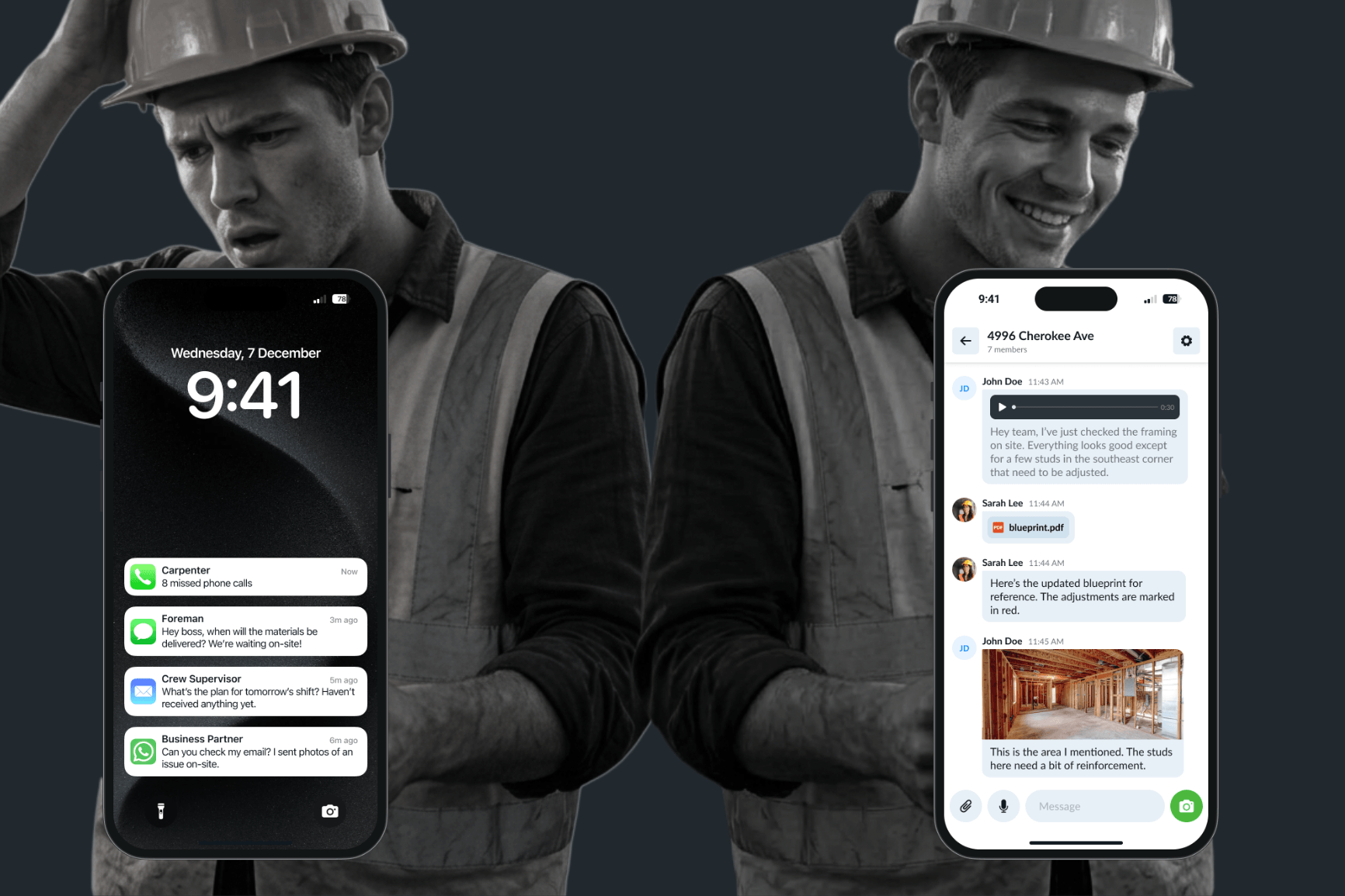
Construction has always been a melting pot, but the 2026 workforce is more diverse than ever. Language barriers have traditionally been a major bottleneck for site safety and precision.
Today, AI-driven communication tools are performing “invisible” labor. When a Site Manager sends a safety alert in English, a subcontractor reads it in Spanish, Polish, or Hindi on their own device. This isn’t just a convenience; it’s a democratisation of safety. When everyone truly understands the “why” behind a task, the “how” becomes significantly more efficient.
Remato is a platform made especially for builders and construction teams. It helps everyone on a project stay connected in one place instead of using many different tools like phone calls, emails, or WhatsApp messages. Because construction work changes quickly, teams need fast communication that is easy to follow and easy to track. Remato makes this easier by allowing site workers, supervisors, and office staff to send messages, share photos, and update tasks directly inside the project. This helps reduce confusion, saves time, and keeps important information from getting lost.
Construction is often described as a technical industry, yet technical success depends heavily on communication quality.
Every drawing issued, instruction given, hazard reported, delay explained, or decision documented contributes to project performance. Where communication is clear, projects move with coordination. Where communication is weak, even technically strong teams face avoidable disruption.
The future of construction communication will increasingly combine digital systems, visual tools, and stronger communication leadership. However, the core principle remains unchanged: successful construction depends on people understanding each other at the right time, with the right information, and with enough clarity to act correctly.
Communication is important because every construction task depends on people understanding instructions, drawings, schedules, and safety requirements correctly. Poor communication can lead to delays, mistakes, and extra costs.
The most common methods are:
– digital communication tools
– face-to-face discussions
– phone calls
– site meetings
– drawings
– written reports
Common causes include:
– unclear instructions
– language barriers
– too many subcontractors scattered on different chats
– missing updates
– poor document control
Poor communication often causes:
– rework
– wasted materials
– labour delays
– incorrect installations
General chat apps like WhatsApp or Telegram often mix personal and work messages. A construction platform like Remato keeps project communication organised and linked to tasks.
Good teams communicate every day through:
– morning briefings
– site updates
– progress discussions
– issue reporting
Daily communication prevents small problems becoming big ones.
Remato